



25% Off All Products Black Friday November Special! Free Delivery on All Orders over R500 SHOP NOW
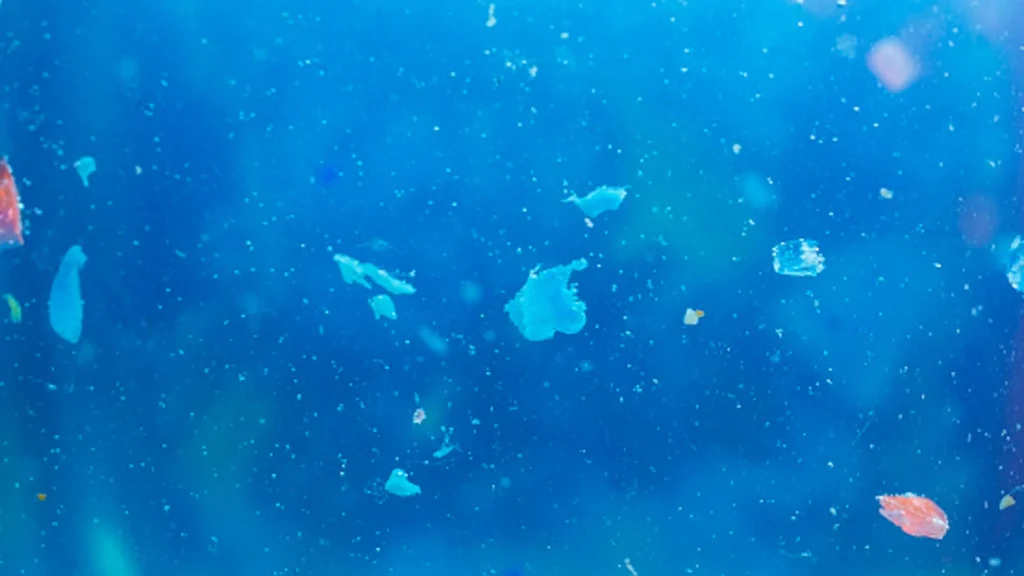
Microplastics have been found almost everywhere scientists have looked for them, from rivers and oceans to soil, food, drinking water and even the air.
South Africa is no exception.
Local researchers have detected microplastics in freshwater systems, treated drinking water, boreholes, coastal sediments, fish and mussels. This does not mean that South Africans should panic or stop drinking tap water. However, it does show that plastic pollution is no longer only the litter we can see. It is gradually breaking down into much smaller particles that can remain in our environment for many years.
So, how serious is South Africa’s microplastic problem, what does it mean for our drinking water, and is it likely to become worse?
What are microplastics?
Microplastics are tiny pieces of plastic measuring less than 5 mm. Some are so small that they cannot be seen with the naked eye.
They generally fall into two categories:
Microplastics can enter the environment through littering, illegal dumping, stormwater drains, wastewater discharge, tyre wear, synthetic clothing fibres and the gradual deterioration of plastic products.
Once released, they do not simply disappear. They can travel through rivers, settle in dams and sediments, enter the ocean or be consumed by animals.
Are microplastics present in South African water?
Yes. South African studies have confirmed their presence in both natural water sources and treated drinking water.
A baseline study published in 2023, based on samples collected in November 2018, examined water from South Africa’s largest bulk drinking-water supplier, including source water, water immediately after treatment and water in the distribution network serving areas such as Johannesburg, Mabopane, Ga-Rankuwa and Pelindaba.
Researchers detected:
A 2024 study investigating tap water from three suburbs in Gauteng detected microplastics in all the samples tested, with concentrations ranging from 4.7 to 31 particles per litre. Fibres were the most common type, accounting for approximately 83% of the particles identified. While the study confirms that microplastics are present in household tap water in the areas tested, its limited geographical scope means that the findings cannot be considered representative of Gauteng, or South Africa, as a whole. Differences in sampling, laboratory methods and the sizes of particles measured also make direct comparisons with other studies difficult.
Read the Detection and characterisation of microplastics in tap water from Gauteng, South Africa
A broader 2024 review found that microplastics have been recorded in South African drinking water, rivers, groundwater, marine environments, soil and aquatic animals. Freshwater concentrations reported in the reviewed studies ranged from approximately 0.33 to 56 particles per litre, while particularly high concentrations were found in some marine sediments.
Read the review of microplastics in South Africa
These findings confirm that microplastics are present, but they do not mean that every municipality or water source has the same level of contamination. South African research is still limited, and differences in sampling and testing methods make it difficult to compare studies directly.
How serious is the problem in South Africa?
The most accurate answer is that microplastics are a genuine and growing environmental concern, but their exact impact on human health is still being investigated.
The environmental problem is already clear
South African harbours can act as collection points for microplastics carried into the sea by rivers and stormwater drains. Plastic particles can settle in harbour sediment and later be released into the ocean when water flow increases.
Local studies have also found microplastics in fish and mussels. One review reported microplastics in wild mussels along the Cape Town coast as well as mussels sold through retail outlets, demonstrating one possible route through which people may consume these particles.
Read the South African Journal of Science review
Plastic waste that enters the environment is particularly concerning because it can continue fragmenting into smaller particles rather than biodegrading completely (Nahman et al., 2023). In South Africa, local estimates suggest that 15,000 to 40,000 tonnes of plastic reach the ocean each year from land-based sources (Verster and Bouwman, 2020). The CSIR study adopts the upper end of that range and adds an assumed 10,000 tonnes a year for flooding and marine sources, giving roughly 50,000 tonnes (Nahman et al., 2023).
Read the CSIR technical report · Read Verster and Bouwman (2020)
The human-health risk is less certain
Scientists know that people can be exposed to microplastics through food, drinking water and air. What has not yet been established is exactly how different particles, sizes, polymers and exposure levels affect the human body over many years.
The World Health Organization has stated that the available evidence does not currently indicate a clear human-health concern from microplastics in drinking water at the levels studied. However, it also stresses that the evidence remains limited and that considerably more research is needed, particularly into the smallest microplastics and nanoplastics.
Read the WHO report on microplastics in drinking water
This is an important distinction. There is not enough evidence to claim that South African tap water is unsafe because of microplastics, but there is also not enough evidence to dismiss the issue completely.
Why could microplastics become a bigger issue in South Africa?
Without stronger intervention, South Africa’s microplastic burden is likely to increase.
Several local conditions make this a particular concern.
Plastic consumption and waste leakage
South Africa generates an estimated 41 kg of plastic waste per person each year, well above the global average of about 29 kg (Pucino et al., 2020). Packaging is the largest source of plastic leakage across the pilot countries IUCN assessed, including South Africa (Pucino et al., 2020). Where waste is not collected, recycled or safely contained, it can enter streets, rivers, dams and coastal environments. Every plastic item that escapes into nature has the potential to break down into microplastics.
Where waste is not collected, recycled or safely contained, it can enter streets, rivers, dams and coastal environments. Every plastic item that escapes into nature has the potential to break down into microplastics.
Ageing wastewater infrastructure
Conventional water and wastewater treatment systems were generally designed to remove contaminants such as suspended matter and disease-causing microorganisms, not microscopic plastic particles and other contaminants of emerging concern.
The Department of Water and Sanitation has acknowledged that existing treatment technologies are not specifically designed to remove these emerging contaminants. Strengthening wastewater management will therefore be an important part of preventing microplastics from continually entering rivers and dams.
Read the Department of Water and Sanitation statement
Flooding and extreme weather
Heavy rain and flooding can wash litter and illegally dumped waste into stormwater systems, rivers and the ocean. Severe weather events can therefore move large volumes of plastic waste into South Africa’s waterways in a very short time.
Population growth and urbanisation
Growing urban populations create more packaging, synthetic textile and household waste. Unless waste collection and treatment infrastructure keeps pace, more plastic is likely to leak into the environment.
What does the future look like?
Microplastic pollution is likely to become more widespread if South Africa continues with business as usual, but that outcome is not inevitable.
A South African modelling study found that the country could reduce plastic pollution by approximately 63% by 2040 through coordinated changes across the plastics value chain. These include reducing unnecessary plastic demand, replacing problematic materials, improving waste collection, increasing recycling and managing landfills more effectively.
Read more about South Africa’s plastic-reduction pathway
South Africa has also introduced Extended Producer Responsibility regulations, which place greater responsibility on producers for the packaging and other products they put onto the market.
Research into improved treatment is continuing too. A Western Cape project is testing a filtration system designed to remove chemicals and microplastics while treating water at a continuous flow. Developments like these could help shape more effective treatment solutions in the future.
Read about the Western Cape water-treatment research
The future will ultimately depend on action by government, manufacturers, retailers, municipalities and consumers. Better recycling alone will not solve the problem. South Africa also needs to reduce unnecessary plastic production, improve collection services, prevent illegal dumping and stop plastic from reaching rivers in the first place.
Five practical ways South Africans can reduce their exposure and plastic footprint
No household can eliminate microplastics completely. However, a few sensible changes can help reduce personal exposure while also preventing more plastic from entering the environment.
1. Choose filtered tap water instead of single-use bottled water
Reducing bottled-water consumption avoids unnecessary plastic packaging and may also reduce exposure to particles released from plastic bottles and caps.
A good-quality point-of-use water filter can provide convenient drinking water at home without the ongoing cost and waste created by disposable bottles. When choosing a filter, check whether its ability to reduce microplastics has been independently tested and always replace the cartridge according to the manufacturer’s instructions.
2. Carry a reusable bottle
Use a durable stainless-steel or glass bottle and refill it with filtered tap water. Avoid repeatedly reusing disposable plastic bottles, particularly when they are scratched, damaged or have been left in a hot car.
3. Cut down on unnecessary plastic packaging
Choose loose fruit and vegetables where practical, use reusable shopping bags and favour refillable or recyclable packaging. Supporting businesses that reduce packaging encourages wider change across the market.
4. Reduce synthetic fibres released during washing
Polyester, nylon, acrylic and other synthetic fabrics can release tiny fibres during a wash.
You can reduce this by:
5. Dispose of plastic responsibly
Separate recyclable plastics where local services are available and support community recycling initiatives. Never leave waste near drains, rivers or beaches, where it can quickly be carried into the wider water system.
Preventing plastic from entering the environment is far easier than trying to remove it after it has fragmented into millions of tiny particles.
Should South Africans be worried about drinking tap water?
Microplastics should be taken seriously but not sensationalised.
The available evidence confirms that microplastics are present in some South African water sources and drinking-water systems. An earlier baseline study found very low concentrations, while the more recent Gauteng study detected higher levels in the three suburbs tested. Differences in sampling, analytical methods and the sizes of particles measured mean that the results cannot be compared directly. Most importantly, neither these studies nor the World Health Organization’s current assessment provides sufficient evidence to conclude that the levels detected pose an immediate human-health risk.
Microbiological contamination remains a more clearly established and urgent drinking-water risk in areas where water and wastewater infrastructure is failing.
The sensible response is therefore not panic. It is prevention, better monitoring and practical action.
By reducing single-use plastic, preventing waste from reaching waterways and choosing properly tested water-filtration solutions, South Africans can reduce unnecessary exposure while helping address the much larger environmental problem.
Microplastics may be small, but the choices we make about plastic and drinking water can have a much bigger impact.
Share this areticle
Recent Blogs